West Game II
- 4.5
- Rating
- 1.00M
- Installs
- Free
- Price

 Analysis by App-foxy
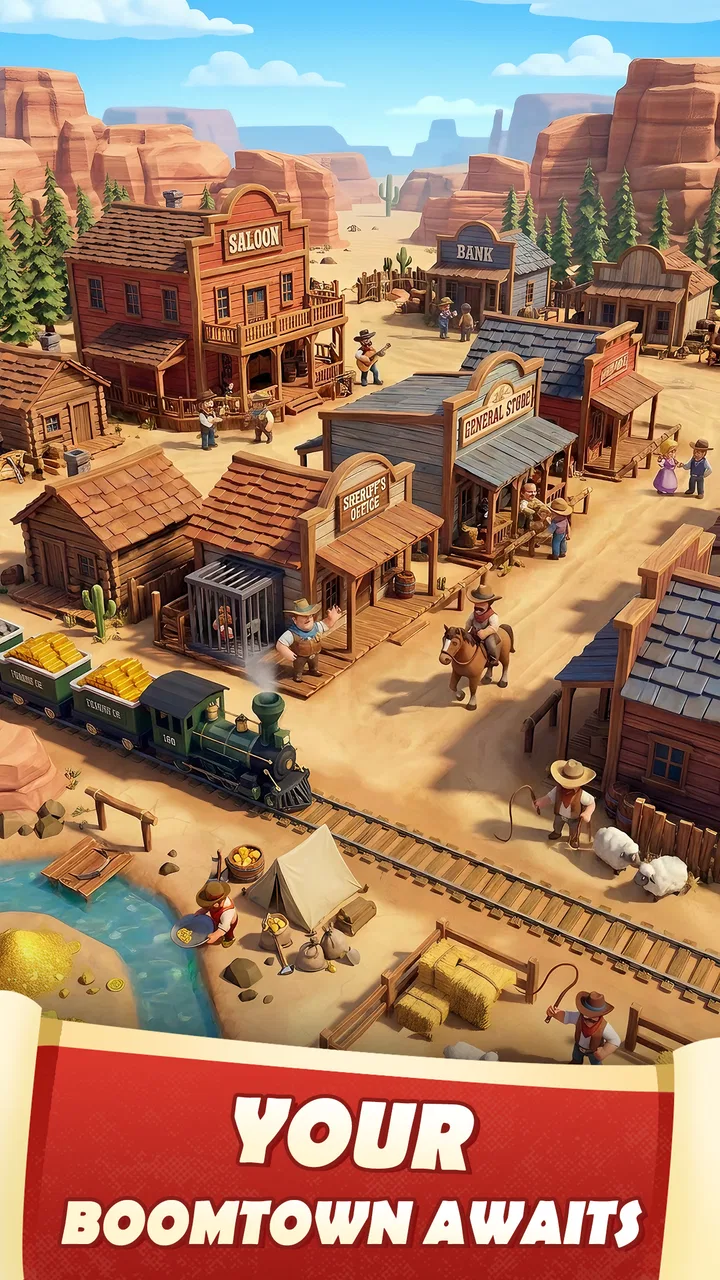
West Game II is a free strategy game from LeyiGames that immediately aims for a familiar fantasy: building a life in a rough frontier and turning a small settlement into something powerful. I spent time looking at it less as a quick download and more as a game that has to justify staying on my phone after the first burst of curiosity disappears. That distinction matters, because frontier-themed strategy games can feel exciting during the opening hours and then become repetitive once the early goals are finished.
My first impression is that this is best understood as a long-term management game rather than a short, self-contained adventure. You are not simply moving from one dramatic scene to the next. The appeal comes from making decisions, checking progress, improving your position and deciding where your limited attention is most useful. That structure can be satisfying if you enjoy gradual development, but it may feel slow if you want immediate action every time you open a game.
The game sits in the strategy category, carries a Teen content rating and is free to download. It has reached over a million installs, with an average rating of 4.5 from around forty thousand ratings. Those numbers suggest that the core idea has found a sizeable audience, although popularity alone does not guarantee that its pacing will suit everyone. I would treat it as a game to sample patiently rather than one to judge after a few minutes.
You May Also Like

 Blood Strike: 2.5 Anniversary
Blood Strike’s Loadouts Turn Every Drop Into a Tactical Gamble
A close look at Blood Strike’s custom loadouts: how fast access to signature weapons reshapes its battle royale rhythm, rewards preparation, and narrows the gap between fights.

 Pandora - Music & Podcasts
Pandora’s Music Is Easy to Start, but Harder to Recover
Pandora’s strength is its low-effort path from a seed to a station. Its weak spot is how much confidence it asks you to place in connection, setup, and quiet recovery.

 8 Ball Pool
 Is Built on Rivalries, Rematches, and Routine
A close look at the rivalries, rematches, shared routines, and unanswered safety questions that turn a quick pool match into a persistent mobile community.

 Samsung Music
’s Quiet Strength Is Playing What You Already Own
Its reach comes less from spectacle than from dependable access to a personal library. That simplicity is both the app’s strongest retention engine and its ceiling.

 AccuWeather: Weather Radar
AccuWeather Review: A Quick, Clear Forecast for Everyday Decisions
For everyday plans, the best forecast is the one you can understand quickly. AccuWeather makes rain timing, radar, and local conditions easy to act on, with a few trade-offs.

 Hill Climb Racing
Why Hill Climb Racing Still Turns Crashes Into One More Run
A tiny car, a bumpy hill and one more upgrade: Hill Climb Racing keeps resurfacing because its simple chaos makes every near-miss feel personal.
More From Our News Desk



From the first week to the long haul
I find the shift from early growth to long-term play is best judged by the quality of the choices, not by how many tasks appear on screen. A useful test is whether I can name a priority before opening the game and leave with a clearer plan afterward. That helps separate an engaging routine from simple upkeep, which is the next trade-off worth considering.
Why the opening feels easy to return to
The first week is where West Game II makes its strongest case. Early progress is usually the most rewarding part of a strategy game because every improvement feels visible. A settlement that begins with obvious room to grow gives you a clear reason to come back, and the frontier setting adds personality to what could otherwise be a series of menus and timers. I found the western theme useful because it gives the development loop a sense of place instead of making every upgrade feel completely abstract.
The opening also benefits from having several kinds of decisions competing for attention. You may want to strengthen your position, improve production, prepare for a future challenge or simply finish the next available objective. That creates a pleasant feeling of being busy without requiring constant concentration. A short session can still feel productive when you have enough time to complete one task, inspect your progress and leave.
My practical advice is to avoid treating every available improvement as equally urgent. New players often spend their early resources wherever the game points them, then discover that a more deliberate order would have made the next stage smoother. I got better results by identifying the bottleneck that was slowing everything else down and working on that first. In a management game, removing one restriction can be more valuable than collecting several small upgrades that look attractive individually.
Another useful habit is to open the game with a purpose. Before starting a session, I would decide whether I was checking progress, preparing for a larger objective or simply using up available actions. That small routine prevents the game from turning into aimless tapping. It also helps reveal whether the basic loop genuinely interests you. If you repeatedly open it without knowing what you want to accomplish, the novelty may already be wearing thin.
The trade-off between momentum and patience
West Game II understands the satisfaction of visible momentum, but strategy games built around gradual advancement always ask for patience. The early stage can make progress feel generous because there are many obvious goals close together. Later, the same structure may require more waiting, more resource planning and more frequent decisions about what deserves priority.
This is where the free-to-play design becomes important. The game is free, but optional in-app purchases range from $0.99 to $99.99 per item. I would not recommend spending simply to remove the feeling of waiting before you know whether the underlying loop suits you. A purchase can make progress feel faster, yet it cannot solve a deeper problem such as disliking the management style or finding the frontier theme uninteresting.
For a new player, the healthiest approach is to treat the opening period as a trial of the routine, not as a race. Learn which actions have lasting value, notice how often you actually want to check in and resist the urge to measure your experience against players who may be approaching the game differently. The first week should answer one question: do I enjoy planning the next step even when the reward is not immediate?
What keeps the game useful after the initial excitement
Long-term value depends on whether the game gives you meaningful reasons to return rather than merely reminding you that something is ready. In my experience, the strongest reason to keep a strategy game installed is a sense of ownership over decisions. If your choices change how smoothly the next stage unfolds, routine maintenance can feel like strategy. If every session becomes the same sequence of claims and upgrades, the frontier atmosphere cannot carry the experience forever.
West Game II has the right general shape for players who enjoy incremental planning. It can fit into a daily routine because progress does not require a single long sitting. I can imagine checking it during a break, making a few decisions and leaving with a clear next objective. That is a better use case than expecting it to replace a focused console-style session.
The important distinction is between activity and value. A game can always give you something to collect, but that does not mean the action is worth doing. I paid attention to whether each return helped me make a better decision or merely cleared notifications. When the game encouraged planning, it felt engaging. When the task was only to repeat a familiar maintenance action, the session became easier to skip.
One of my more useful habits was keeping a mental “next session” note. I would finish by deciding what I wanted to inspect or improve the next time I opened the game. This sounds simple, but it changes the experience from passive checking to purposeful continuation. It also exposes a weakness: if you cannot identify an interesting next step, the game may be relying more on routine than on genuine strategic curiosity.
Maintenance: the real cost of keeping a frontier running
The maintenance burden is not measured only in minutes. It is also measured in attention. A game that asks you to remember several unfinished goals, watch multiple progress tracks and react to changing priorities can become mentally noisy even when each individual action is easy.
I think West Game II is most comfortable for players who like a light daily obligation. You can treat it as a small planning ritual, similar to checking a personal project in stages. That rhythm will appeal to people who enjoy returning to a growing settlement. It is less suitable for anyone who wants a game that can be ignored for long periods and then resumed without needing to reconstruct what matters.
To reduce friction, I would group actions by purpose instead of opening every screen at random. First check what is ready, then look for the biggest current limitation, and only after that consider optional improvements. This three-step order prevents low-value tasks from consuming attention. It is also a good way to see whether your progress is being driven by decisions or by simply following the most visible prompt.
Another trade-off is the relationship between convenience and spending. Optional purchases can be tempting when a task is close to completion or when you want to catch up quickly. My recommendation is to set a personal rule before that moment arrives. For example, decide that you will only spend after several days of consistent play and only on something that improves a part of the game you already enjoy. That keeps the purchase from becoming a reaction to impatience.
Because the game is free, the maintenance question is especially important. The download costs nothing, but your time and attention still have value. If you find yourself opening it mainly because you feel obligated to protect previous progress, rather than because you want to make a new decision, that is a sign to reduce your routine or move on.
Where fatigue begins
The main source of fatigue is the familiar one in persistent strategy games: repetition can gradually replace discovery. At first, each improvement changes the shape of your settlement and gives the setting more meaning. After enough cycles, the same actions may feel like chores unless the game continues to present decisions that matter to you.
I also noticed how easily a player can confuse a busy interface with strategic depth. Many available actions do not automatically create meaningful choices. The useful question is whether choosing one path forces you to give up something else, delay another goal or accept a different risk. When the answer is no, the action may still be pleasant, but it should not be mistaken for deep planning.
The western setting can soften repetition, but it cannot eliminate it. Players who already know they dislike resource management, gradual upgrades or games that ask for regular check-ins will probably not change their mind because of the theme. A more direct action game would be a better alternative for someone who wants quick rounds and a clear finish. Likewise, a traditional turn-based strategy game may suit you better if you prefer carefully bounded matches instead of an ongoing settlement that keeps developing between sessions.
There is also a social and competitive pressure that can affect enjoyment in this kind of game, even when you begin casually. Seeing stronger progress elsewhere can make normal advancement feel inadequate. I found it more enjoyable when I treated other players’ pace as background information rather than a target. If the game starts making you feel that regular play is not enough unless you spend, that is not a challenge I would advise chasing.
The version I reviewed is 1.5.6, and it requires Android 6.0 or later. Those details make it accessible to people using older compatible Android devices, but compatibility is not the same as comfort. On a smaller or less responsive phone, a management-heavy game can feel more tiring because browsing and checking several areas takes longer. I would pay attention to how quickly you can complete your normal routine; if every visit feels cumbersome, the game loses much of its value even when the strategy itself is appealing.
Who will get the most from it
I would recommend West Game II to someone who likes a frontier backdrop, gradual development and the satisfaction of leaving a settlement in a better state than they found it. It works particularly well for players who enjoy short, repeated sessions and who are comfortable making progress over time instead of demanding a complete story in one weekend.
It can also suit a player who wants a strategy game that fits around a busy day. Imagine opening it during a lunch break, checking what has completed, choosing the next improvement and closing it before work resumes. Later, you return with a clearer objective. That scenario is more convincing to me than marathon play, because the game’s value comes from continuity and planning rather than constant intensity.
I would be more cautious about recommending it to someone who dislikes timers, recurring maintenance or optional purchases appearing around progression. Even if you never buy anything, the presence of purchase options can influence how you interpret waiting and advancement. Players who want a fully self-contained premium experience may prefer paying once for a game with a defined ending and fewer reasons to check back.
I would also suggest skipping it if your main goal is competitive action with immediate mechanical feedback. The frontier presentation may look energetic, but the lasting experience is still based on management and progression. If you want fast reactions, short matches or a campaign that concludes cleanly, another strategy subgenre will likely be a better fit.
Does it earn a permanent place on my phone?
My answer is conditional, which is more useful than calling it an automatic keeper. West Game II earns lasting space when I approach it as a calm, ongoing strategy routine. It gives me a reason to plan, return and gradually shape progress, and the setting makes that routine more distinctive than a completely generic management interface.
It does not earn permanent space merely because there is always another task waiting. The game needs to keep giving me decisions that feel personal: which limitation to solve, which improvement to delay and how much attention the next stage deserves. When those choices remain interesting, the maintenance feels worthwhile. When they collapse into repetition, the game becomes a habit I am performing rather than a game I am choosing.
For that reason, I would give it a fair trial without spending, establish a manageable check-in rhythm and judge the experience after the opening excitement has settled. If you still look forward to deciding what happens next, the free entry makes it easy to keep exploring. If your sessions have become automatic or stressful, uninstalling is a reasonable conclusion rather than a failure.
My final recommendation is simple: keep it if you enjoy the routine of building a frontier over time, not just the first rush of expansion. LeyiGames has created a strategy game with enough atmosphere and gradual progress to attract patient planners, but its long-term success depends on whether its recurring decisions stay meaningful for you. The Teen rating, broad Android compatibility and free entry make trying it straightforward, while the optional purchases and maintenance demands are reasons to play deliberately. For the right player, it can become a satisfying daily project; for everyone else, the novelty may fade before the settlement feels like a lasting investment.
FAQs for West Game II
01What is West Game II about?
West Game II is an action-packed strategy game set in the Wild West. Players build and manage their own frontier town, recruit gunslingers, and engage in battles against outlaws and rival players. The game blends city-building with real-time strategy elements, offering a rich narrative and immersive gameplay experience.
02Is West Game II free to play?
Yes, West Game II is free to download and play. However, the game offers in-app purchases that allow players to buy premium items, currency, and other enhancements. These purchases can speed up progress or provide cosmetic upgrades, but they are not necessary to enjoy the core gameplay.
03What are the system requirements for West Game II?
West Game II requires a device running Android 5.0 or iOS 10.0 or later. It is optimized for both smartphones and tablets, providing a seamless experience across different screen sizes. Ensure you have sufficient storage space and a stable internet connection for the best gameplay experience.
04Can I play West Game II with friends?
Yes, West Game II features a multiplayer mode where you can team up with friends or join alliances. Collaborate to strategize, share resources, and participate in large-scale battles against other players. The social aspect is a key part of the game, enhancing the competitive and cooperative elements.
05How do updates and new content work in West Game II?
The developers of West Game II regularly release updates that introduce new content, features, and improvements. These updates may include new missions, characters, and events to keep the gameplay fresh and engaging. It's recommended to keep the app updated to enjoy the latest additions and bug fixes.
Pros
- Immersive Wild West theme with detailed graphics.
- Engaging storyline with challenging missions.
- Varied characters and customization options.
- Real-time strategy elements enhance gameplay depth.
- Active community with frequent events.
Cons
- Requires a stable internet connection.
- In-app purchases can be quite costly.
- Some features locked behind a paywall.
- Game can be resource-intensive on older devices.
- Occasional bugs affecting gameplay.

West Game II
Gallery